Stereotype

-

201285

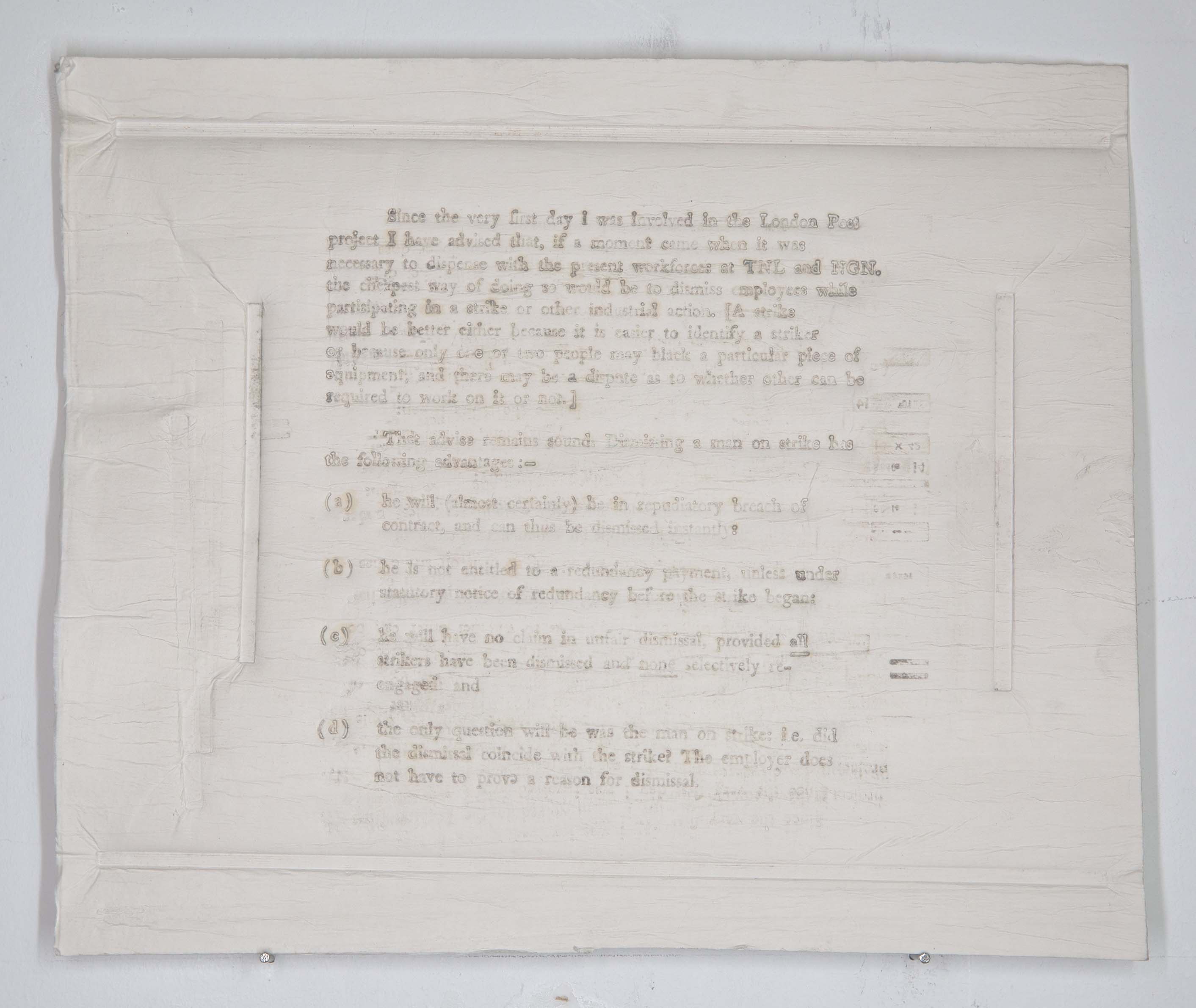
After the Wapping dispute had begun in early 1986 (the then unnamed) Stereotype made their first major breakthrough by orchestrating the leaking of a letter written by Farrer & Co (Murdochs Lawyers) to Rupert Murdoch dated December 20th 1985. The letter advised Murdoch that the best way to sack his print workers would be to induce a strike first, as then News International would not be obliged to pay any striking workers a redundancy package. Once leaked the letter became a huge part of Brenda Dean’s (General Secretary of SOGAT) campaign for the striking workers, helping to significantly sway public opinion in support of the print workers.

In an attempt to regain the support of the public, Rupert Murdoch made an offer to SOGAT and the AUEW, rather than sell off the fleet street buildings where News International previously printed their papers, he would give them to the print unions, along with all the hot metal typesetting equipment. Although the offer required the unions to end their dispute with News International, Stereotype was largely in favour of taking the deal, seeing the sites as a potential base of operations, already equipped with the presses and machinery needed. The offer was rejected by SOGAT and the AUEW however, as the fleet street printing plants were deemed too large and in too much a state of disrepair to be profitable. The typesetting equipment in the building would be later thrown out and destroyed by News International.

To mark the 25th anniversary of the rejection of this offer, many years since the death of hot metal typesetting, Terry Ellis ambitiously attempted to see through the entire printmaking process from start to finish. The aim was to cast Farrer and Co’s letter into a stereotype, a solid lump of lead containing all the characters / images of the print. Due to Murdoch’s offer being rejected, this would ironically be Stereotype’s first stereotype.

The process starts by hand arranging type, followed by pressing a layered paper mache like material into the type to make an impression of it, this would make what is called a flong. The flong can then be curved into a cylinder, before being used to cast lead, creating a cylindrical stereotype so that a newspaper can be printed on a roll.

Unfortunately, very little equipment or information remains on stereotyping, and no attempt at the process ever yielded accurate enough results to be printed. By the time the deadline of the 25th anniversary came around, Ellis had not completed the project, and only had one poorly made flong to show for his efforts.

-